Research / Brightsite
The first tree falls
A woodcutter's axe gets a sideways swing, severed trees come down under their own weight, and daylight begins to move.
- Published
- BrightsiteWorld in development
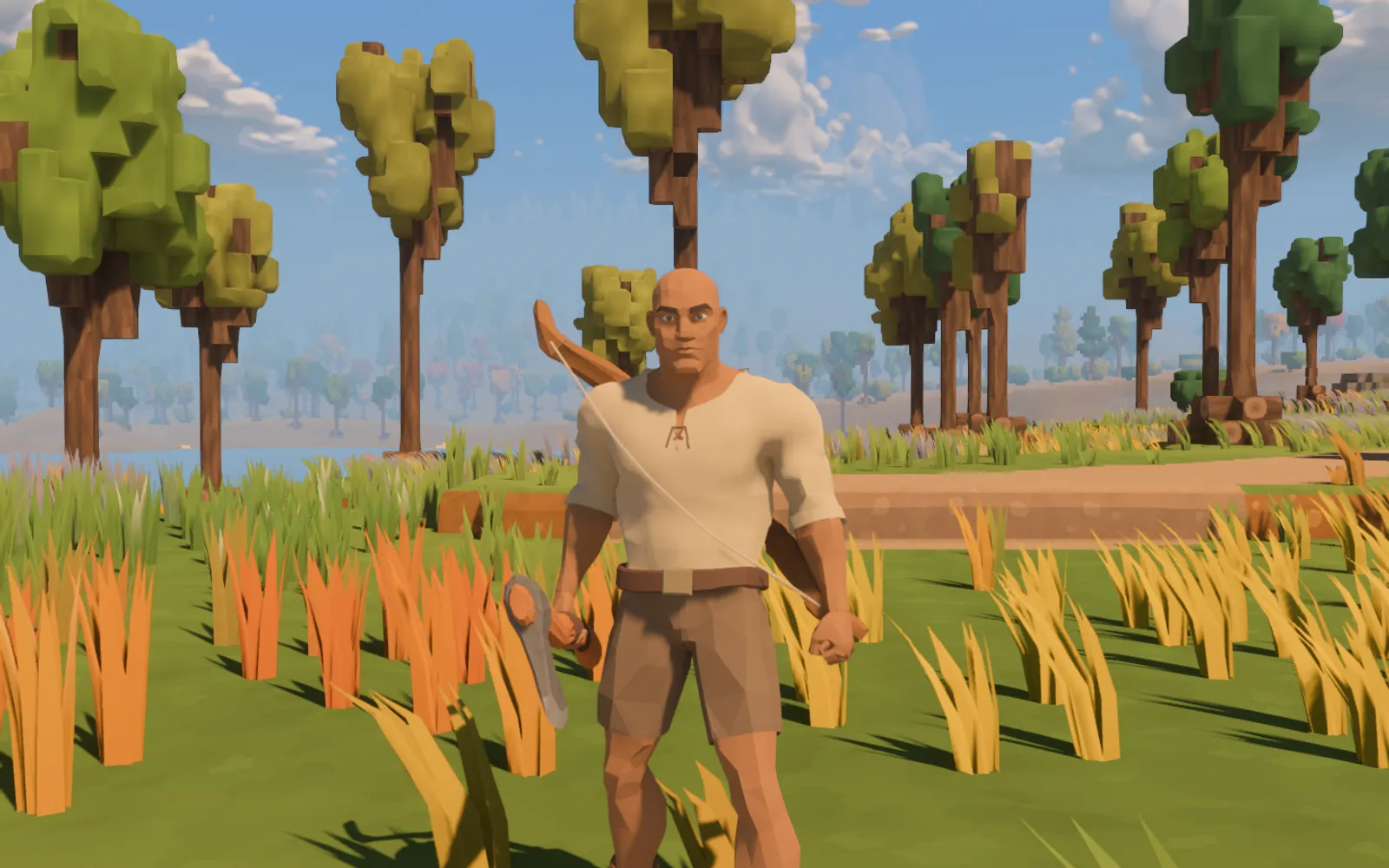
The traveller has an axe to take into the woods. Today brought its low carry and sideways swing together with a real cut into a tree, followed by the first version of felling: cut the supporting wood, and the trunk and crown can come down.
It makes the trees part of the changing world. A cut has a place and a moment, and the tree has weight once it loses the ground beneath it.
When the blade reaches the wood
The axe rests low at the traveller’s side. During the swing, the blade crosses in front of the body and returns to its carry, with the cut timed to the point where it reaches the surface being aimed at.
That contact matters. The world should respond when the tool arrives, so the movement and the edit tell the same story.
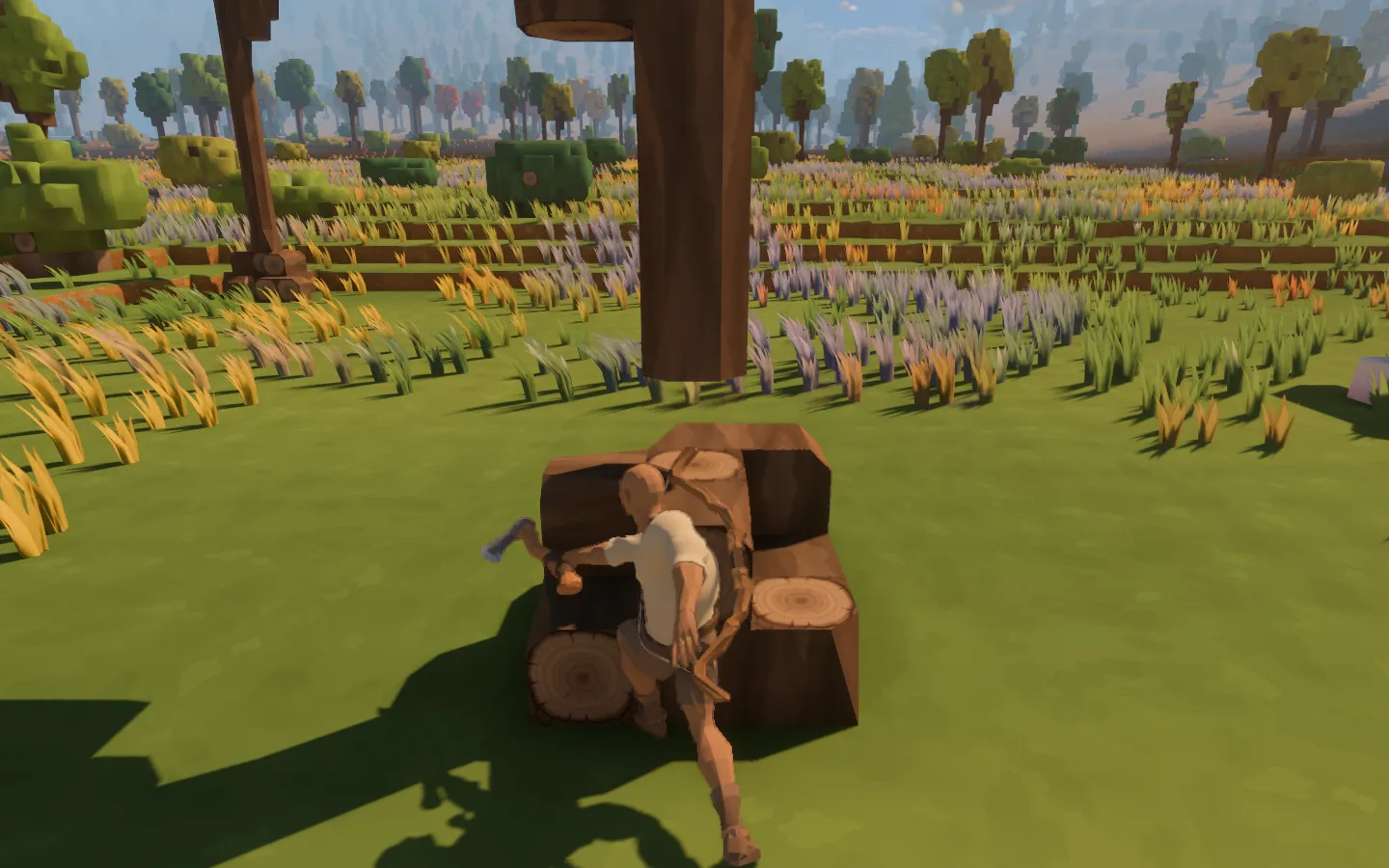
The first cut in the native review sequence: the axe has crossed the wood and the severed tree has been released.
The scene here is a controlled test with a small generated oak placed within reach. It uses the normal aim, axe swing and block-editing path, making it useful for seeing the action clearly before trying more complicated trees and positions.
Losing its footing
A tree stays standing while its trunk still has a supporting connection. Once that connection is severed, the unsupported wood and crown become a moving piece.
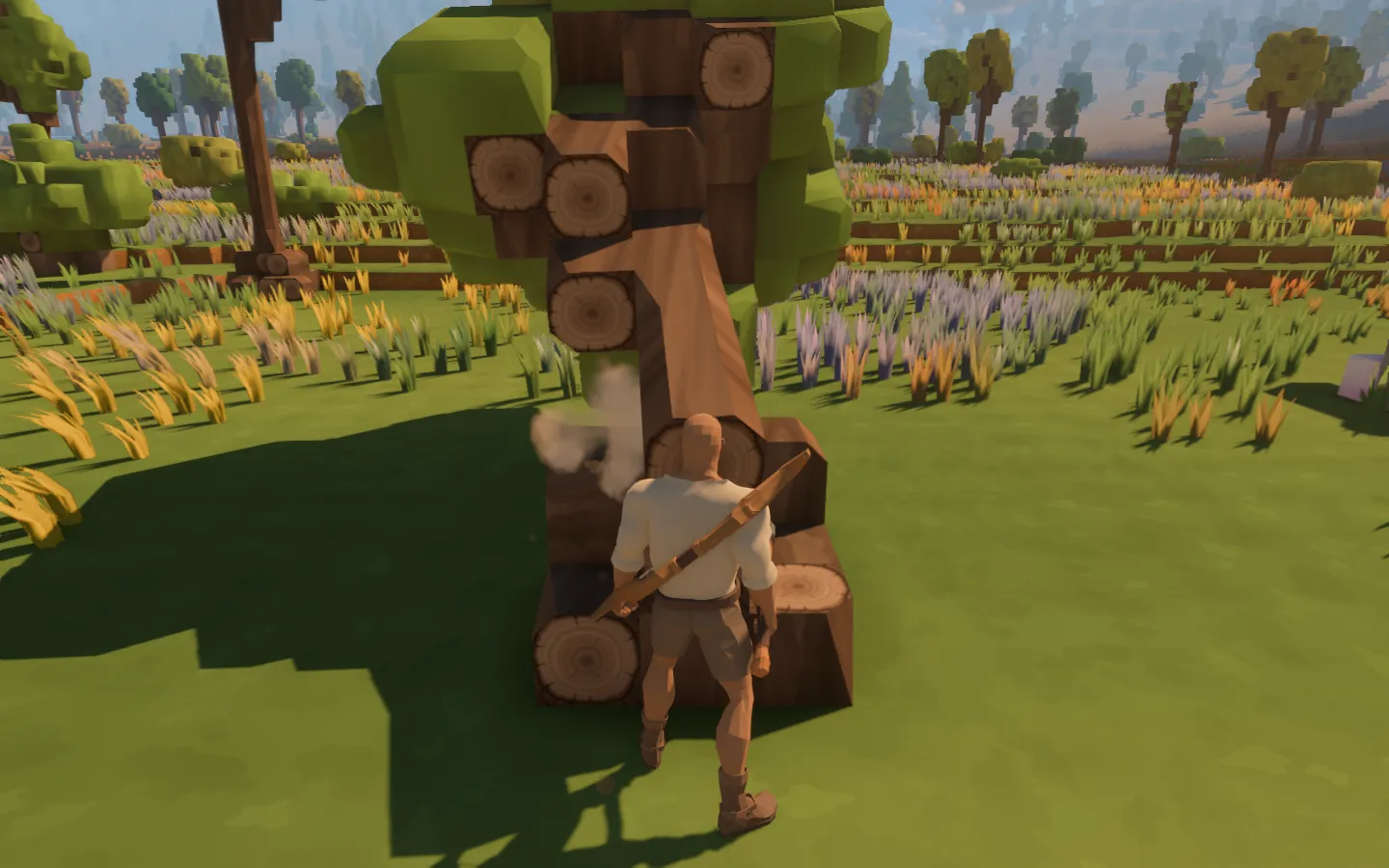
The same tree as it tips and meets the ground. This is the initial felling prototype, with the crown still moving as one piece.
The fall uses gravity and contact with the ground. The released piece can tip, collide and settle, carrying the shape of the tree into its movement. It shares the physical debris system used by broken blocks.
This is still the first felling pass. Today’s work is about cutting and falling; gathering a felled trunk into backpack wood comes in a later step. Crowns and branches also have more work ahead as the tree meets the ground.
The light moves on
The valley also gained a running game clock, taking the sun through dawn, daylight and dusk. A place can now change its mood while the traveller stays there.
The town changed shape again as well: a single timber-framed hall now stands above an open green beside the lake, replacing the earlier cottage-and-street study. It is another architectural experiment, with its future town functions still to come.
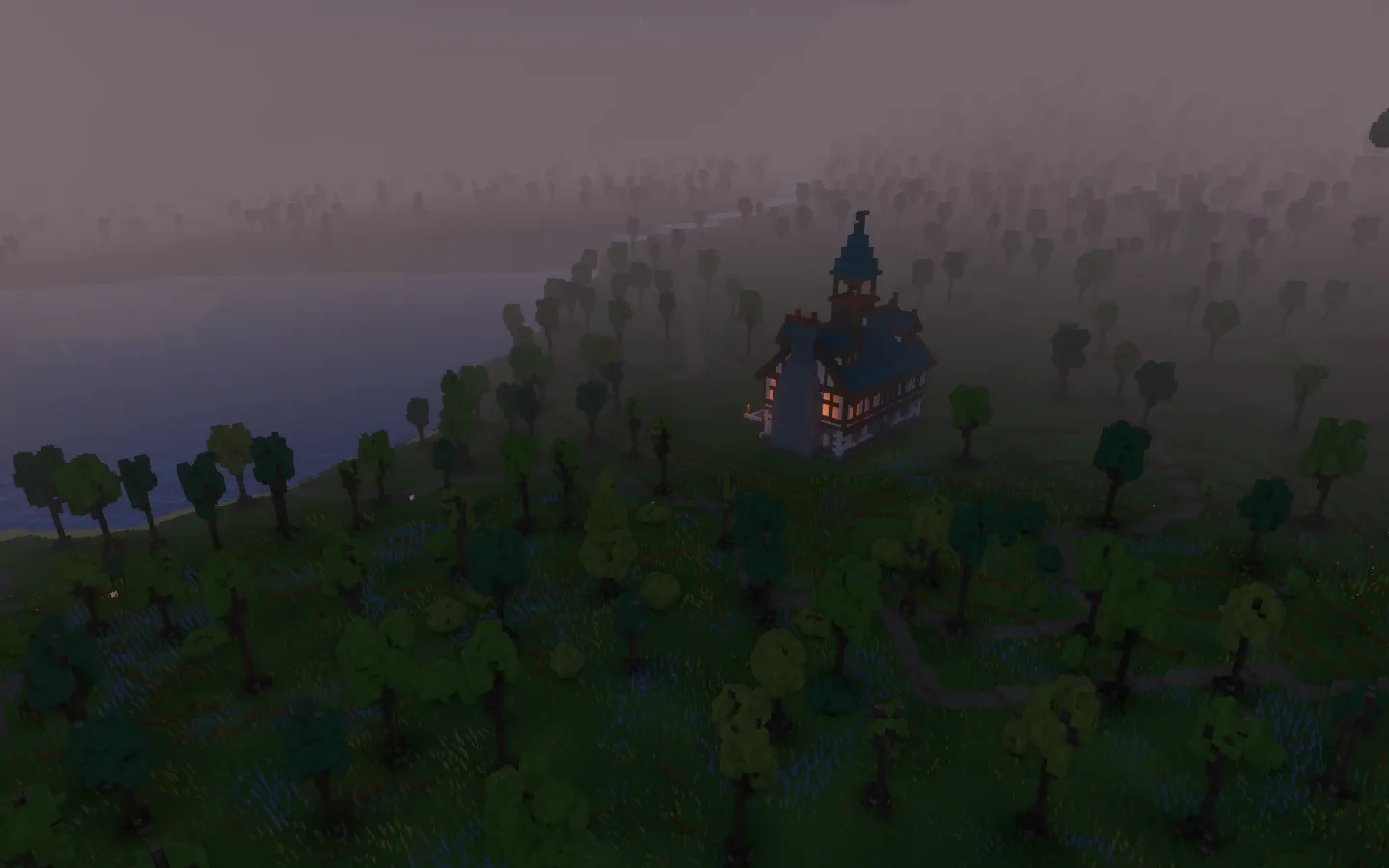
The town-centre study beside the lake, shown in a held dusk view from the same checkpoint.
The light in this screenshot is held for review, but the game’s clock runs during normal play. The fire changed, too, with faceted flames replacing the earlier volume experiment.
There is plenty still to tune in the tool, the falling tree and the light. For today, a simple action has a larger consequence: a swing can change what stands in the woods, and the afternoon can become evening around it.
Archive note: these screenshots were captured on October 21 from the unchanged October 15 late-evening checkpoint and its own assets. The oak was arranged by that build’s native axe-review preset; the cut and fall use the real gameplay path. Dusk uses its existing time-of-day capture setting.