Research / Brightsite
A fresh start, one block at a time
Brightsite returns to an empty valley, then builds a clearer beginning from gathered logs, a workbench and a house raised by hand.
- Published
- BrightsiteWorld in development
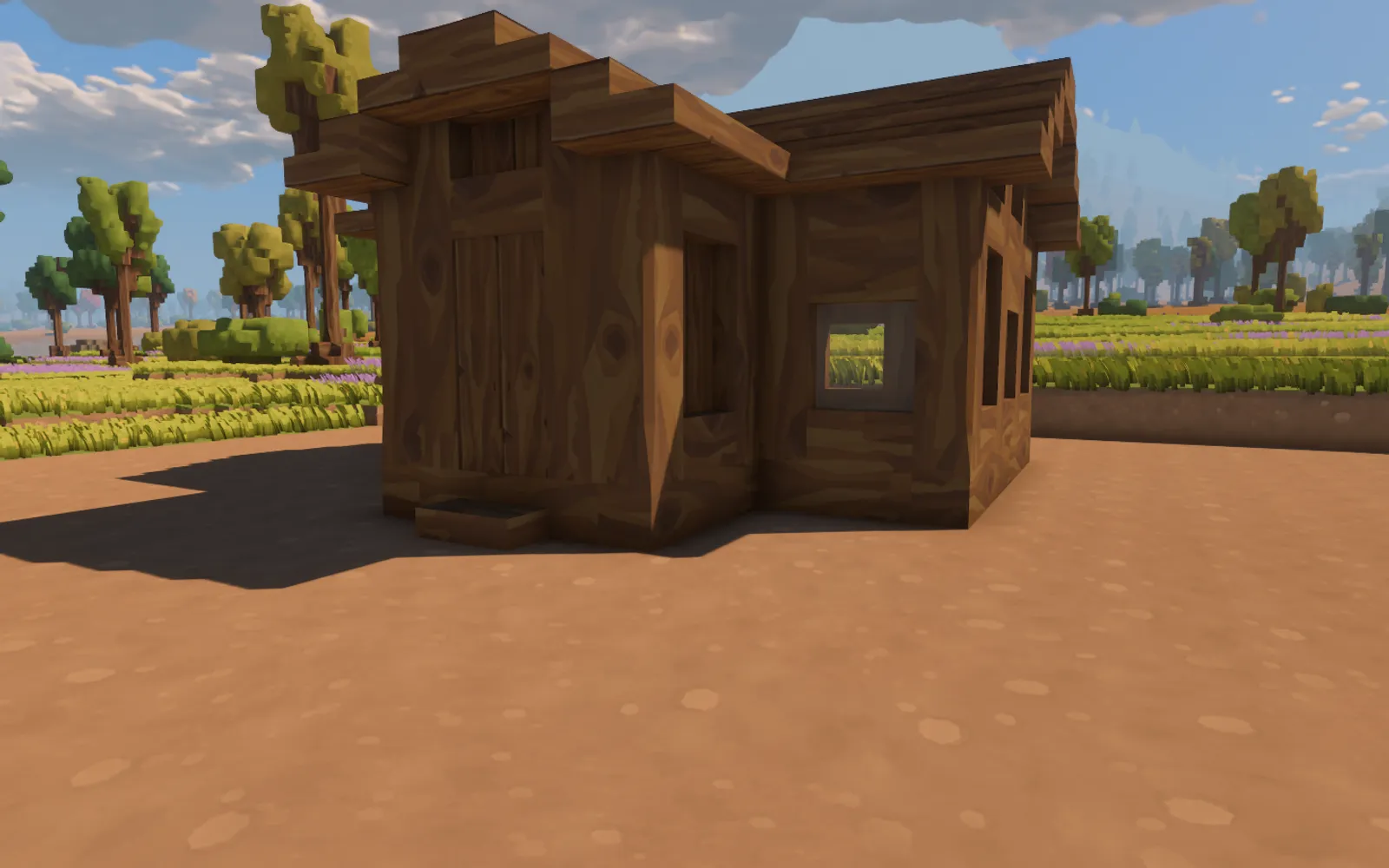
Today was a fresh start for Brightsite. The valley, traveller, moving sun and the look of the world stayed, while the built town and many earlier prototype systems were set aside. We began putting the game back together around the things the player can gather, make and build.
That change matters to the journal: the wildlife, combat and working-town experiments shown in earlier entries are not all present in this version. They remain part of the game’s development history. Today’s playable beginning is smaller and more direct.
From the first logs to a workbench
Bare hands can bring down a tree. Once the fallen wood settles, it becomes logs that can be gathered into the backpack, along with plant fibre from the crown and other plants.
Those materials lead to a workbench and a building hammer. At the bench, logs become timber blocks, and the next pieces of a home can be made: beds, doors, windows and a house blueprint.
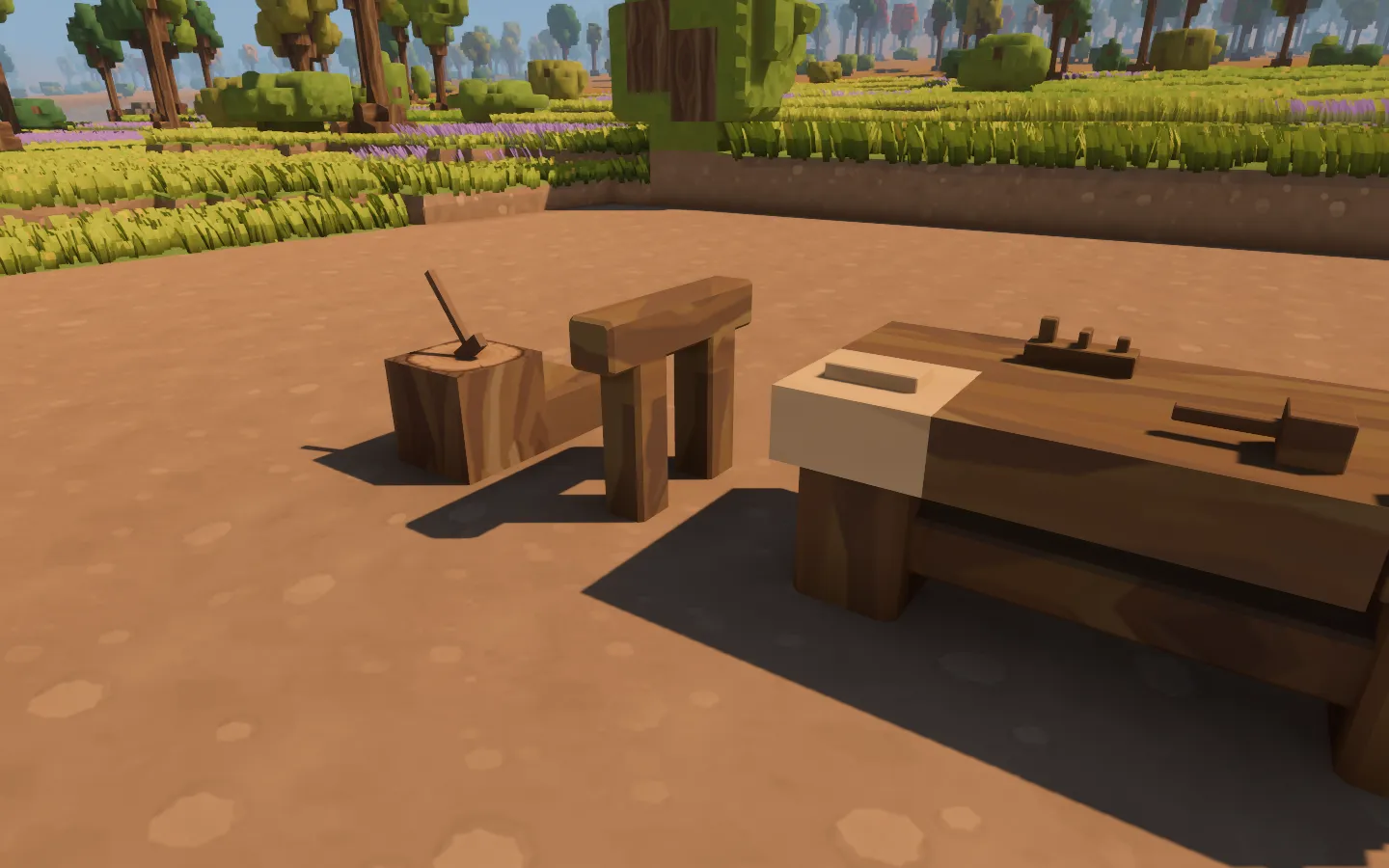
The workbench and its tools, arranged in the original blueprint review scene.
Crafting became immediate during the day. The chosen recipe pays its materials and puts the result away straight away, keeping the attention on what comes next in the world.
Choose a material, then a shape
With the hammer in hand, the building bar lets the player choose how to lay a material. Timber can become a block, slab, wall, post, beam, window frame or door frame. Straw joined as a second building material, bundled from plant fibre.
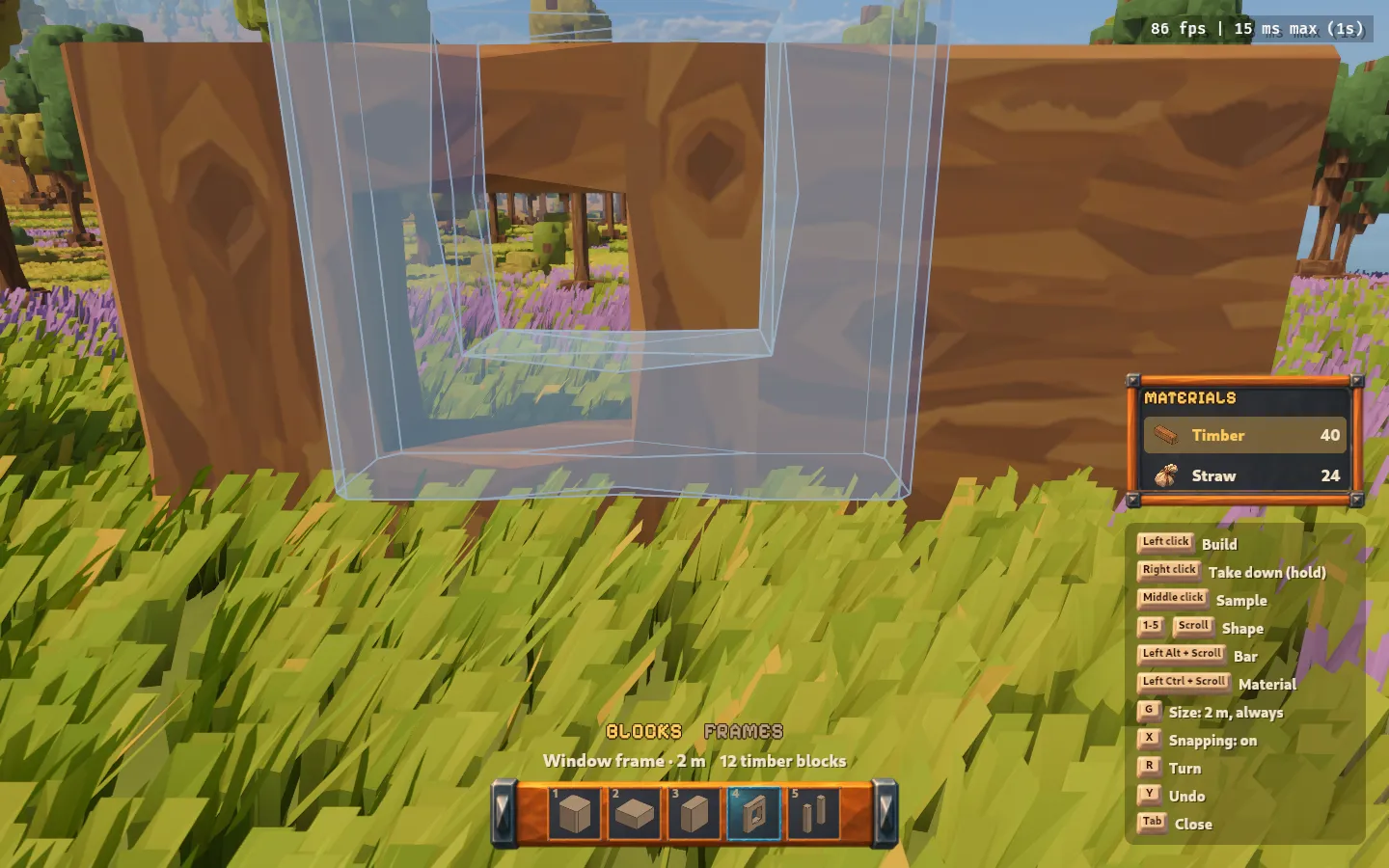
The frame studies and building bar from the same checkpoint, with their original review supplies.
A preview marks the cells a piece will fill, and snapping helps larger pieces line up. Existing blocks stay where they are, with the cost coming from the cells actually placed. Taking work down returns its materials, and undo gives room to try a different arrangement.
Roofs are stepped from the block shapes, keeping the house and free building on the same half-metre grid.
Raising somewhere to stay
The house blueprint sets down a site, with a pale outline showing the finished design. The player raises it from the ground up, paying timber as each part goes in.
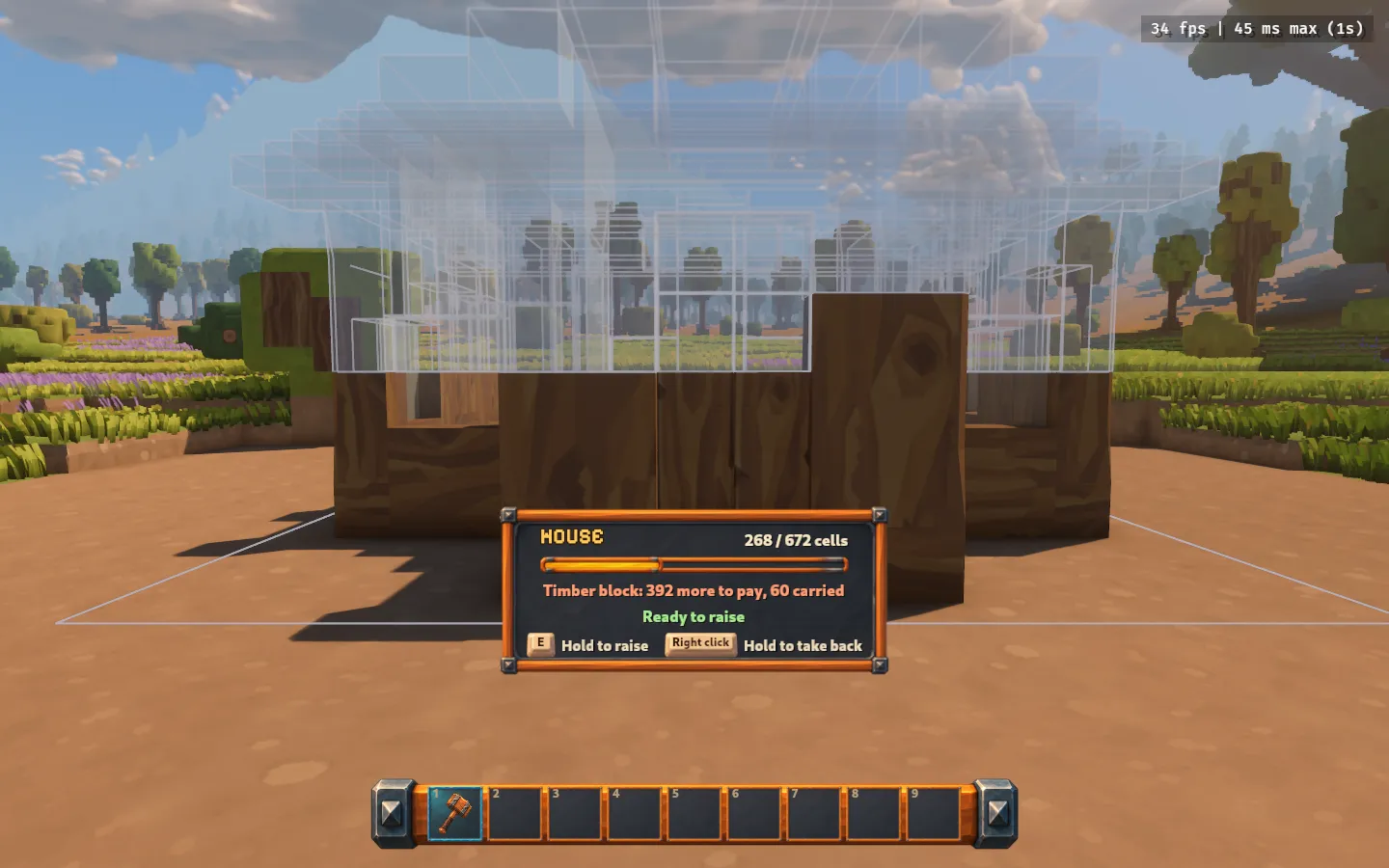
A house site arranged partway through construction, with the remaining shape and timber cost visible.
The completed house is ordinary built blocks, ready to change further. A workbench or bed is a whole piece set down ready for use, while doors and windows fit into their framed openings. Shelter checks begin with the simple question of whether a bed has walls and a roof around it.
There is plenty still to return and refine. For today, the beginning has a clear line through it: gather what the valley offers, make the tools, choose a shape, and raise a place of your own.
Archive note: these screenshots were captured on October 21 from the unchanged October 19 evening checkpoint and its own assets. Its native review presets set out the workbench, completed house, frame gallery and partly raised site with test supplies. The images illustrate those systems; they are not a recorded playthrough from an empty backpack.