Research / Brightsite
A fall, and a way back up
Strong earth-shaping hits can take the traveller off their feet, with a different fall from each direction and a recovery that brings them back into motion.
- Published
- BrightsiteWorld in development
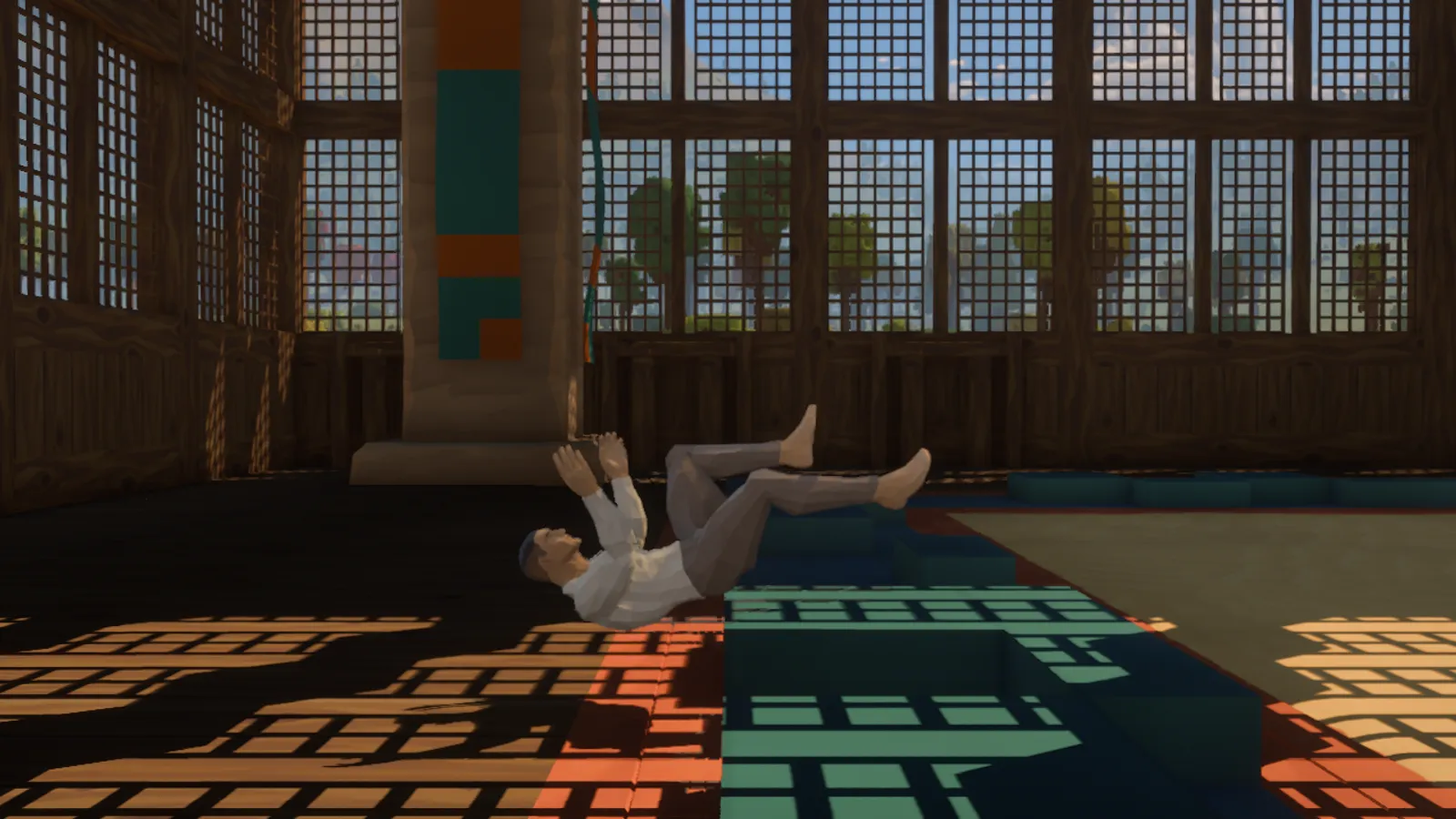
A strong earth-shaping hit can now take the traveller off their feet. There is a direction to the fall, a moment on the ground, and a way back up before movement returns.
Today’s work follows that whole interruption. The traveller can be running when the hit arrives; the motion they were already making gives way to the fall, then returns only after they have recovered. The training hall gives us room to watch those changes closely.
Two directions to fall
A hit from in front throws the traveller backwards, onto their back. A hit from behind sends them forwards instead, with a low airborne entry and the hands reaching for the ground before the knees arrive. The incoming direction chooses which fall plays.
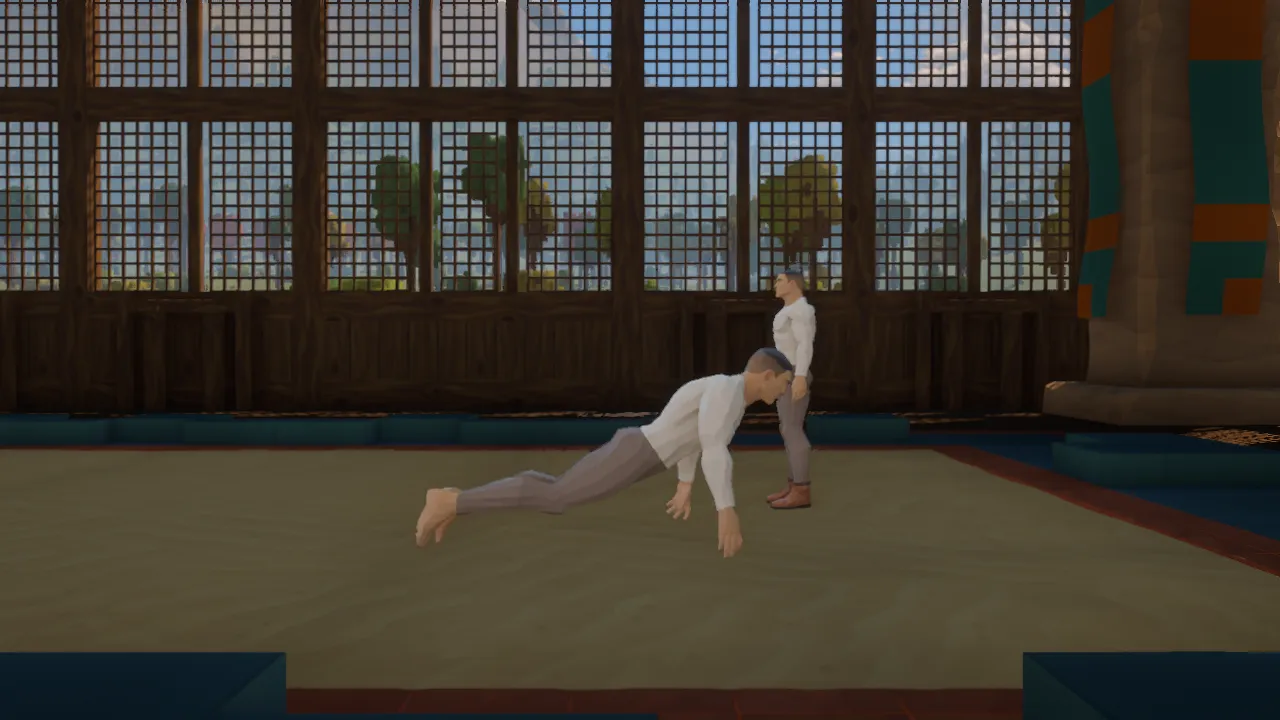
The rear-impact fall, early in its motion. The hands reach down first; the knees follow as the traveller comes to ground.
These falls are triggered by strong earth impacts. Ordinary light and heavy hit reactions keep their own behaviour. A hard enough blow takes away the next step and gives the fall time to finish.
Getting your feet back
The fall and get-up have to belong to the same body that moves through the world. While the traveller is down, movement, jumping and tool actions wait. Reaching the expected landing point in the animation is not enough by itself: the body must have ground beneath it, and getting up needs enough headroom.
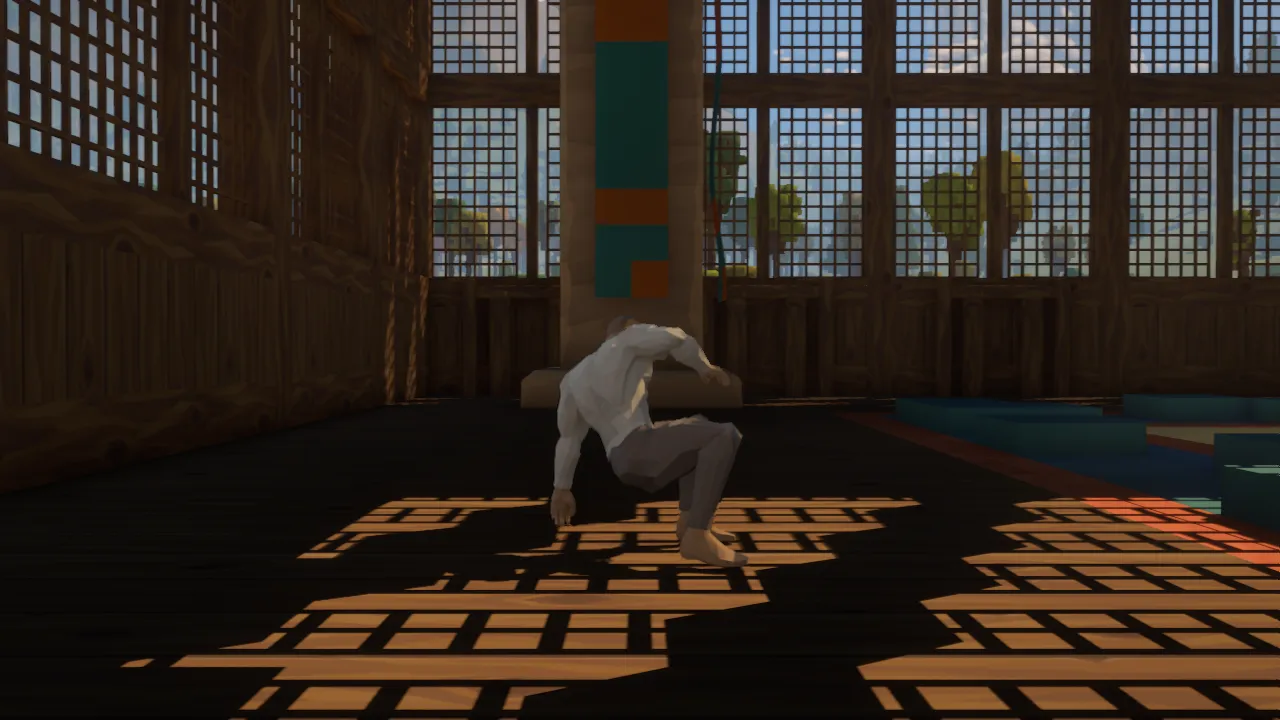
Partway through recovering from the backward fall. Control returns after the get-up, and the running review continues into its next stride.
That makes the end of the motion as important as the impact. The reviewed sequence includes the run before the hit and the return to running afterwards, so the fall is checked as part of movement through a place.
A shoulder takes the smaller hit
The rear shoulder and outer upper back also have their own light and heavy reactions now. The struck shoulder and arm respond together, with the head turning toward that side. A light hit lets the traveller keep moving; a heavy one catches them and holds movement until recovery. Both sides have been checked from walking and running.
There are still limits to this work. A wall can stop or slide the body’s movement while the fall continues, but there is no separate wall-impact reaction or fitting of each limb to the obstacle yet. Some inherited joint-range and skin-fold issues also remain. These are authored falls and recoveries, with more contact work ahead.
Existing October 25 game captures, 1280×720, from a scripted training-hall review. Combat impact messages were triggered during running to inspect the two directions and recovery; these frames do not show a thrown rock arriving. No new game session or character changes were made for this entry.